- Home
- Services
- Web Development
- Custom PHP
- Laravel Framework
- CodeIgniter Framework
- Yii Framework
- WordPress CMS
- Drupal CMS
- Joomla CMS
- Software Development
- .Net Core & MVC
- Node.Js, React & More
- PHP frameworks
- E-Commerce Solutions
- Custom Solution
- Magento
- Shopify
- WooCommerce
- Mobile App Development
- UI / UX design
- Email Marketing
- Support & Maintenance
- DevOps & Cloud Automation
- Quality Assurance
- Security, Identity & Compliance
- Monitoring & Alerting
- Data Migration
- Company Overview
- Career
- Our Team
- Our Gallery
- Blog
- Our Works
- Contact Us

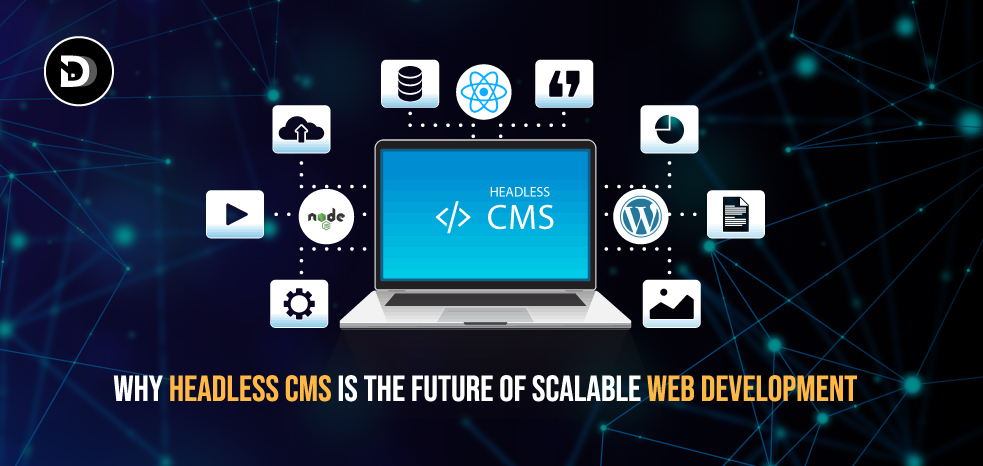
Why Headless CMS is the Future of Scalable Web Development
- development
Introduction
The digital ecosystem is no longer limited to websites. Today, businesses must deliver content across websites, mobile apps, smart devices, kiosks, and even IoT platforms. Customers expect lightning-fast performance, seamless user experiences, and consistent content everywhere. Traditional CMS platforms were not designed for this level of complexity.
As businesses grow and digital transformation accelerates, the demand for scalable web development has become critical. This is where Headless CMS emerges as a revolutionary solution.
Headless CMS is not just a new buzzword in web development; it is a structural evolution that separates content management from content presentation, allowing businesses to scale efficiently, innovate faster, and future-proof their technology stack.
Understanding the Limitations of Traditional CMS
Platforms like WordPress have powered millions of websites worldwide. Traditional CMS platforms combine:
- Backend (content management)
- Database
- Frontend (themes & templates)
While this integrated approach is beginner-friendly, it creates limitations when businesses require:
- Advanced customization
- Omnichannel content delivery
- High performance at scale
- Complex frontend experiences
In a traditional CMS setup:
- Frontend and backend are tightly coupled.
- Scaling one layer often affects the other.
- Performance optimization is restricted.
- Security vulnerabilities increase due to theme and plugin dependencies.
As businesses expand globally and traffic increases, this monolithic architecture becomes a bottleneck.
What is a Headless CMS?
A Headless CMS is a content management system where the frontend is separated from the backend.
Instead of rendering content directly, a Headless CMS delivers content via APIs (REST or GraphQL). Developers can then use any frontend framework to display the content.
In simple terms:
Traditional CMS = Backend + Frontend together
Headless CMS = Backend only (content via API)
This decoupled architecture enables greater flexibility, scalability, and performance.
The Core Architecture of Headless CMS
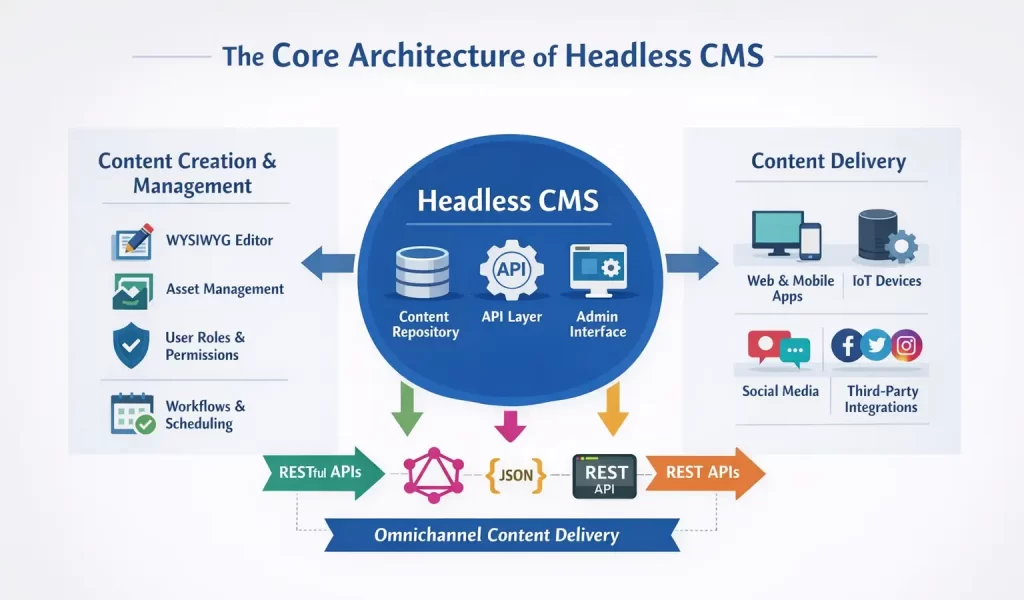
Headless CMS operates on three main components:
1️. Content Repository (Backend)
Stores structured content like:
- Blog posts
- Product information
- Media files
- User data
2️. API Layer
Delivers content through:
3️. Frontend Layer
Built using modern frameworks like:
- React
- Next.js
- Vue.js
Because the frontend is independent, developers can optimize performance, improve UX, and deploy faster updates.
Why Headless CMS is the Future of Scalable Web Development
Now let’s explore the deeper reasons.
1. True Scalability at Enterprise Level
Scalability means handling increasing traffic and complexity without performance degradation.
In Headless architecture:
- Frontend can scale independently using CDN and edge networks.
- Backend can scale separately using cloud infrastructure.
- Microservices architecture can be implemented easily.
This is especially critical for:
- E-commerce platforms
- SaaS applications
- Enterprise dashboards
- High-traffic publishing sites
When traffic spikes, frontend servers can auto-scale without affecting content management.
2. Omnichannel Content Delivery
Modern consumers use multiple devices:
- Desktop websites
- Mobile apps
- Smart TVs
- Wearables
- Voice assistants
Headless CMS delivers content via APIs, allowing the same content to appear everywhere without duplication.
This makes content management centralized but distribution limitless.
3. Superior Performance & SEO Advantage
Performance directly impacts:
- User experience
- Conversion rates
- SEO rankings
With frameworks like Next.js and React:
- Static Site Generation (SSG)
- Server-Side Rendering (SSR)
- Incremental Static Regeneration (ISR)
can be implemented.
This leads to:
- Faster load times
- Better Core Web Vitals
- Lower bounce rates
- Higher search rankings
Google prioritizes performance, and Headless architecture provides the technical foundation for it.
4. Enhanced Security
Traditional CMS platforms expose the frontend and backend together.
In Headless architecture:
- Backend is not publicly exposed.
- APIs are secured with authentication.
- Reduced plugin dependency.
- Lower vulnerability risks.
For enterprises handling sensitive data, this is a major advantage.
5. Developer Freedom & Innovation
Developers are no longer restricted by CMS themes.
They can choose:
- Any frontend technology
- Any hosting provider
- Any deployment pipeline
- Any cloud provider
This freedom accelerates innovation and shortens development cycles.
6. Future-Proof Technology Stack
Technology changes rapidly.
With traditional CMS, redesigning the frontend often requires restructuring the backend.
In Headless:
- Frontend can be rebuilt anytime.
- Backend remains stable.
- New technologies can be integrated easily.
This protects long-term investment.
Headless WordPress: A Smart Migration Strategy
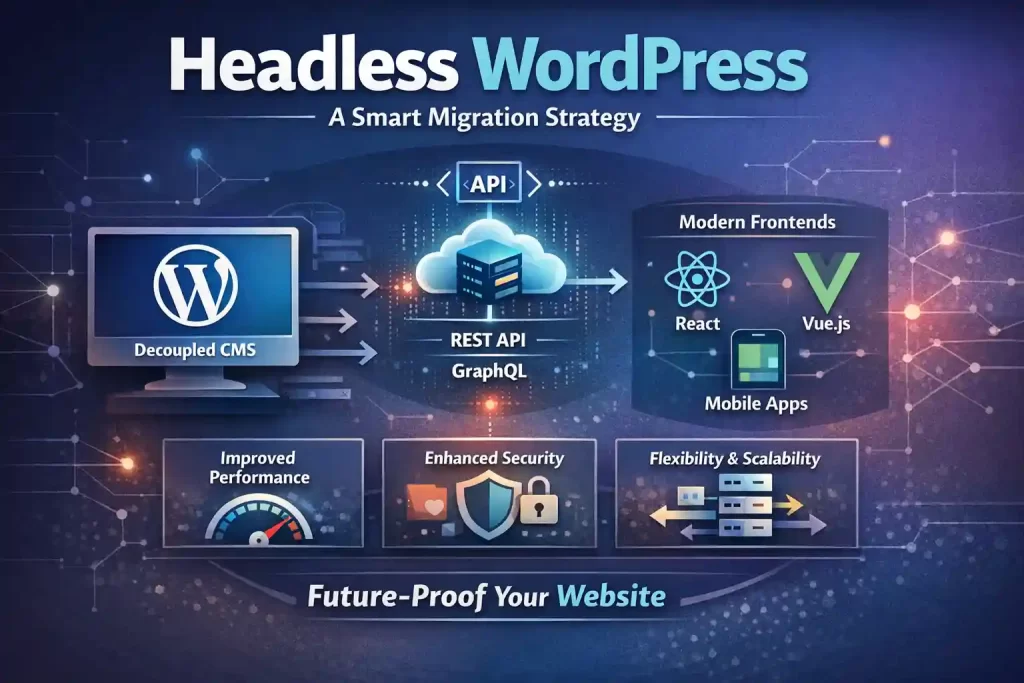
Businesses that love WordPress don’t need to abandon it.
They can use WordPress as a Headless CMS:
- WordPress manages content.
- APIs deliver data.
- Frontend is built with React or Next.js.
This approach offers:
- Editorial simplicity
- Developer flexibility
- Performance optimization
It is one of the most practical ways to modernize existing websites.
Challenges of Headless CMS
No technology is perfect.
Common challenges include:
- Higher initial setup cost
- Need for skilled developers
- API complexity
- DevOps requirements
However, these challenges are manageable with an experienced development partner.
Why 2026 and Beyond Belongs to Headless Architecture
The future demands:
- API-first systems
- Cloud-native deployment
- Microservices architecture
- High-performance UX
- Scalable infrastructure
Headless CMS aligns perfectly with these demands.
Businesses that adopt early gain:
- Competitive advantage
- Faster time-to-market
- Improved customer experience
- Lower long-term maintenance cost
Why Choose Dropndot Solutions for Headless CMS Development
At Dropndot Solutions, we specialize in:
– Headless CMS Development
– Headless WordPress Implementation
– Modular .NET Core Architecture
– Custom Plugin Development
– UI/UX to High-Performance Frontend Conversion
– Scalable Enterprise Web Solutions
Our approach focuses on:
- Performance optimization
- Secure API integrations
- Cloud-ready infrastructure
- Future-proof system architecture
We don’t just build websites, we build scalable digital ecosystems.
Conclusion
Headless CMS is not merely an alternative to traditional content management systems. It is a transformative shift toward scalable, flexible, and performance-driven web architecture.
As businesses demand omnichannel content delivery, enhanced security, and lightning-fast user experiences, Headless CMS stands out as the most future-ready solution.